
Trusted Home EV Charger Installation Services in Fort Collins, CO
Powering the Future of Electric Vehicles
Why Install a Level 2 EV Charger at Home?
While most EVs come with a Level 1 charger that plugs into a standard 120-volt outlet, these chargers can take 8-16 hours for a full charge. A Level 2 charging station significantly reduces charging time, allowing your electric battery to fully charge in just 3-5 hours.
Key Benefits of a Level 2 Charging Station Installation

Faster Charging
Reduce charging times compared to a standard wall outlet.

Convenience
Charge at home without relying on public charging stations.

Increased Property Value
Homes with EV charging stations are more attractive to future buyers.

Smart Charging Features
Control charging sessions via mobile apps, smart home automation, and voice assistants like Alexa and Google Assistant.

Lower Greenhouse Gas Emissions
Transitioning to electric vehicles reduces air pollution, fuel consumption, and reliance on gasoline.

Tax Credits & Rebates
Take advantage of federal, state, and utility incentives to lower the cost of installation.
When Does an EV Charger Need a Dedicated 240-Volt Circuit?
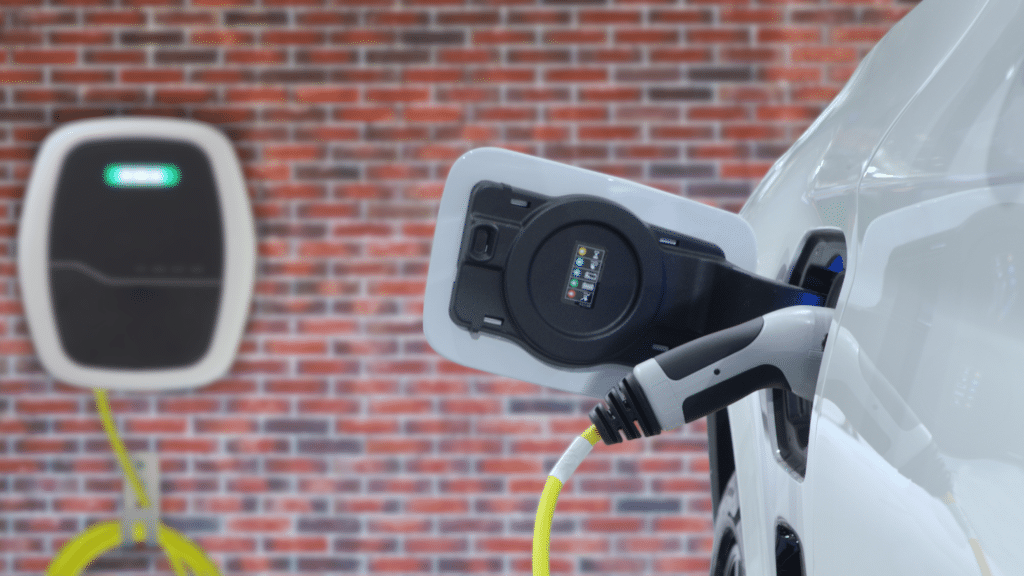
Many Level 2 home EV charging setups require a dedicated 240-volt circuit. The appropriate circuit rating depends on the charger’s instructions, configured charging current, and the home’s load calculation. A larger breaker is not automatically better, and the correct conductor size and protective devices must match the installation. A licensed electrician can assess whether the existing panel has sufficient capacity and whether the chosen route and charger location are practical.
Choosing the Right EV Charger for Your Vehicle
Level 1 vs. Level 2 Chargers
| Feature | Power Output | Charging Time | Best For |
|---|---|---|---|
| Level 1 Charger | 1.4 kW - 2.4 kW | 8 - 16 hours | Plug-in hybrids, occasional drivers |
| Level 2 Charger | 3.6 kW - 19.2 kW | 3 - 5 hours | Daily EV drivers, long-range trips |
Level 2 chargers are ideal for owners of battery electric vehicles (BEVs), plug-in hybrids, and electric trucks, ensuring faster, more efficient charging at home.
Compatible EV Models for Level 2 Charging
We install charging stations for all major electric vehicle brands, including:
- Tesla Model 3, Model S, Model X, Model Y, Tesla Cybertruck
- Hyundai Ioniq 5, Hyundai Ioniq 6, Hyundai Kona EV
- Chevrolet Bolt, Chevrolet Silverado EV, Chevrolet Equinox EV, Chevrolet Blazer EV
- Nissan Leaf, Nissan e-NV200, Nissan Leaf V2H models
- BMW i3, BMW i4, BMW iX, BMW i3 REX
- Audi e-Tron, Audi e-Tron Coupe, Porsche Taycan, Porsche Cayenne Hybrid
- Rivian R1T, Ford Mustang Mach-E, Kia EV9, Kia Niro EV, Genesis GV60
- Luxury cars and alternative fuel vehicles such as the Lucid Air and Lexus RZ
Home EV Charger Installation Readiness Checklist
Before scheduling a Level 2 EV charger installation, identify your vehicle’s charging requirements and the charger model you plan to use. Choose a location that the charging cable can reach safely without creating a walking or driving hazard. Note the distance from the mounting location to the electrical panel, and whether the installation route crosses finished rooms, an exterior wall, or other obstacles.
Why the Electrical Panel Assessment Matters
Level 2 charging commonly uses a dedicated 240-volt circuit, but the correct circuit, conductor size, and protection depend on the charging equipment and the load calculation. An electrician should confirm available capacity before recommending a breaker size or concluding that a service upgrade is needed. Ask which installation steps may require permits or inspections. Contact PH Electric for an EV charger installation assessment in Fort Collins and provide the charger model and proposed location when requesting an estimate.
Our EV Charger Installation Process
PH Electric ensures a seamless, professional installation process for your EV home charger.
1
Free Consultation & Site Inspection
- We evaluate your garage, electrical panel, and available power supply.
- We recommend the best EV charger based on your vehicle, infrastructure, and budget.
2
Permitting & Electrical Panel Upgrades
- We handle all necessary permits and approvals for installation.
- If needed, we upgrade your electrical panel to support higher voltage loads.
3
EV Charger Installation
- Our licensed electricians install your EV charging station safely.
- We ensure proper grounding, circuit protection, and compliance with the National Electrical Code (NEC).
4
System Testing & Smart Charger Setup
- We test your charging station for efficiency and performance.
- We set up Wi-Fi connectivity and mobile app integration for smart charging.
5
Customer Training & Warranty Support
- We walk you through using your EV charger and explain smart features.
- We provide warranty-backed services for long-term support.
Tax Credits, Rebates & Cost Savings
Installing an EV home charger may qualify you for:
- Federal EV Charger Tax Credit: Up to 30% off installation costs.
- Utility Company Rebates: Many electric utilities offer rebates for Level 2 charger installations.
- State & Local Incentives: Some states offer additional incentives for charging station installation.
We help you explore available tax credits and rebates to lower your EV charger installation cost.
Frequently Asked Questions (FAQ)
How much does it cost to install a Level 2 EV charger?
The cost varies based on electrical wiring needs, panel upgrades, and installation complexity. Prices typically range from $800+ – $2,500+, including labor and permits.
Can I install a Level 2 EV charger myself?
Do I need to upgrade my electrical panel for EV charging?
How long does EV charger installation take?
Most installations take 3-6 hours, but complex wiring or panel upgrades may take longer.
Can I install an EV charger outside?
Yes. Many Level 2 chargers, like Grizzl-E and JuiceBox Pro, are designed for outdoor use and are weather-resistant.
Do EV chargers come with a warranty?
Can I choose the charger location before the site assessment?
Yes. Mark your preferred parking position and mounting area, but allow the electrician to confirm that the location, cable reach, wiring route, and electrical capacity are suitable.
Is a 200-amp panel required for a 240-volt EV charger?
No universal panel size applies to every EV charger installation. The decision depends on the household’s calculated load, the charger’s electrical requirements, and the available service capacity. An electrician can evaluate the options before recommending a panel or service upgrade.
Why Choose PH Electric for Your EV Charger Installation?
PH Electric is a trusted provider of EV charging solutions, offering expert installation, smart home integration, and energy-efficient charging station setups. We ensure code compliance, safety, and high-performance charging solutions for electric cars, trucks, and SUVs.
Serving Fort Collins & the Greater Front Range – We specialize in EV charger installation for residential and commercial properties.
Schedule Your EV Charger Installation Today! Contact PH Electric for a free quote, professional installation, and expert guidance on EV home charger installation and tax incentives.